The Gardens at La Foce
Just down the road from Montepulciano, about 20 minutes (roughly six miles) from Villa Nobile and close enough for an afternoon, is La Foce. Iris and Antonio Origo created the estate and its gardens in the 1920s and '30s, and today it is one of the most beautiful gardens in Italy.
A garden that unfolds
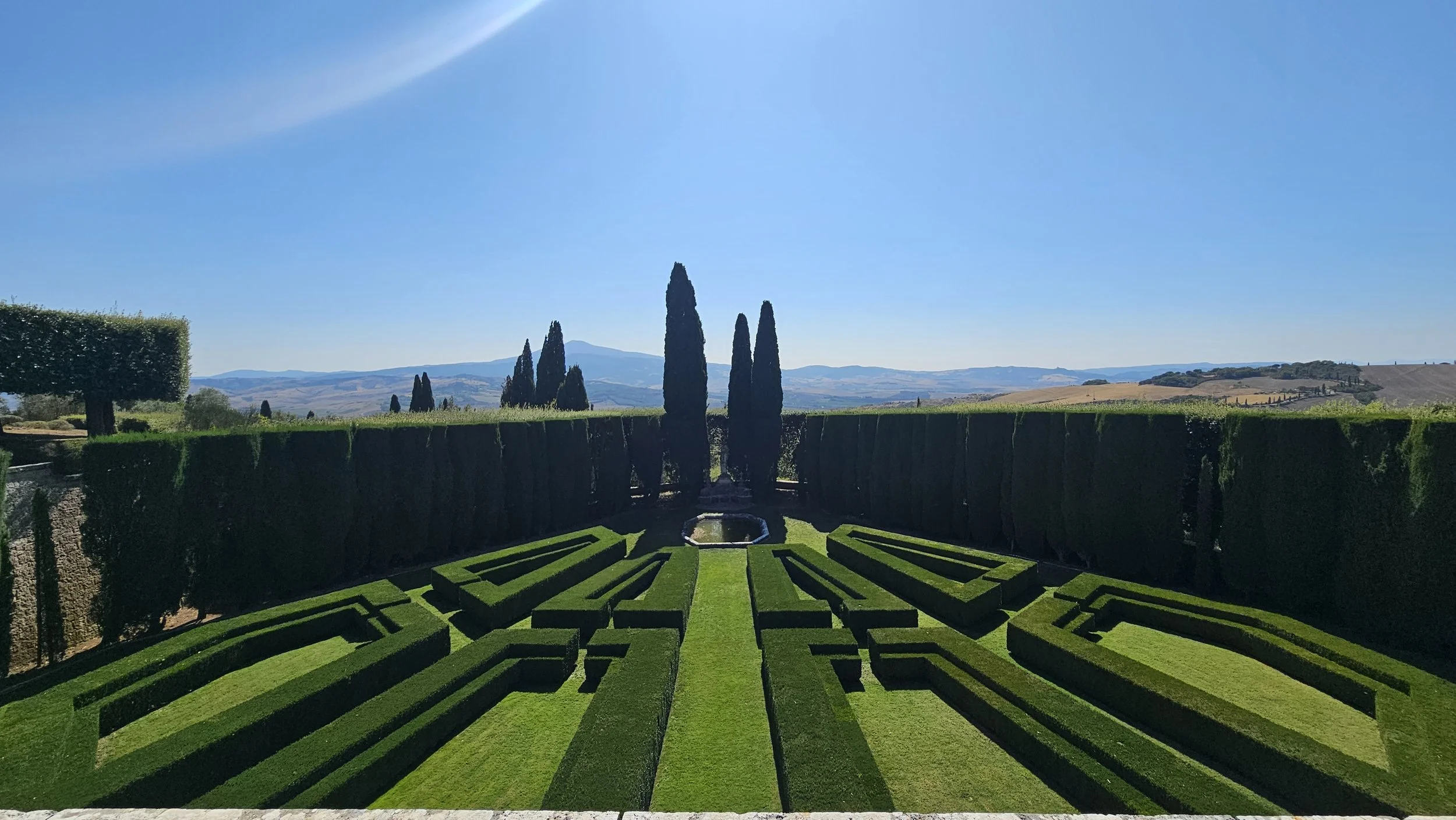
Iris and Antonio Origo took over La Foce in 1924 and brought in English architect Cecil Pinsent to design the garden. It grew gradually between 1925 and 1939, shaped to suit the old villa at its center and to frame the view over the valley.
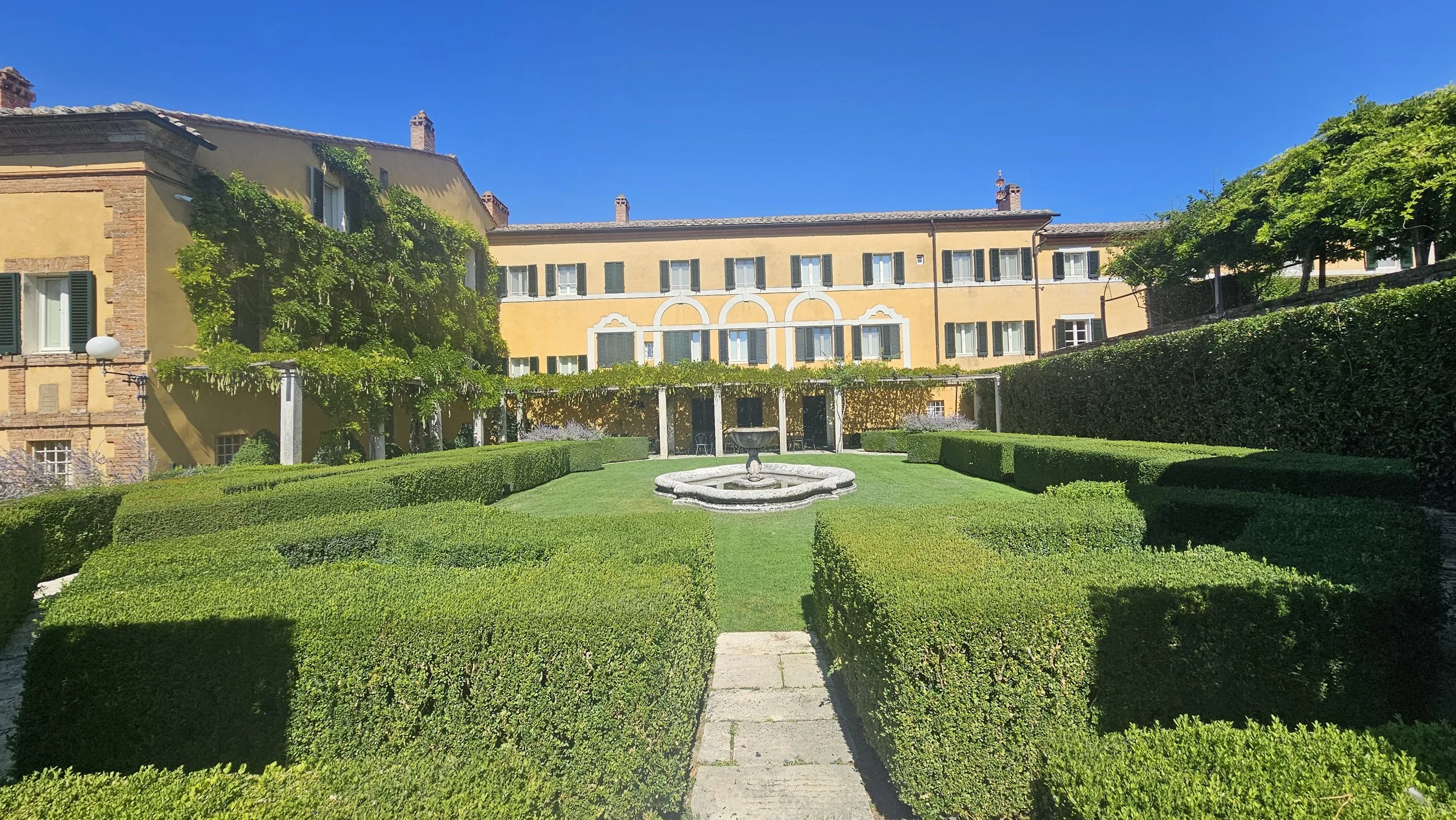
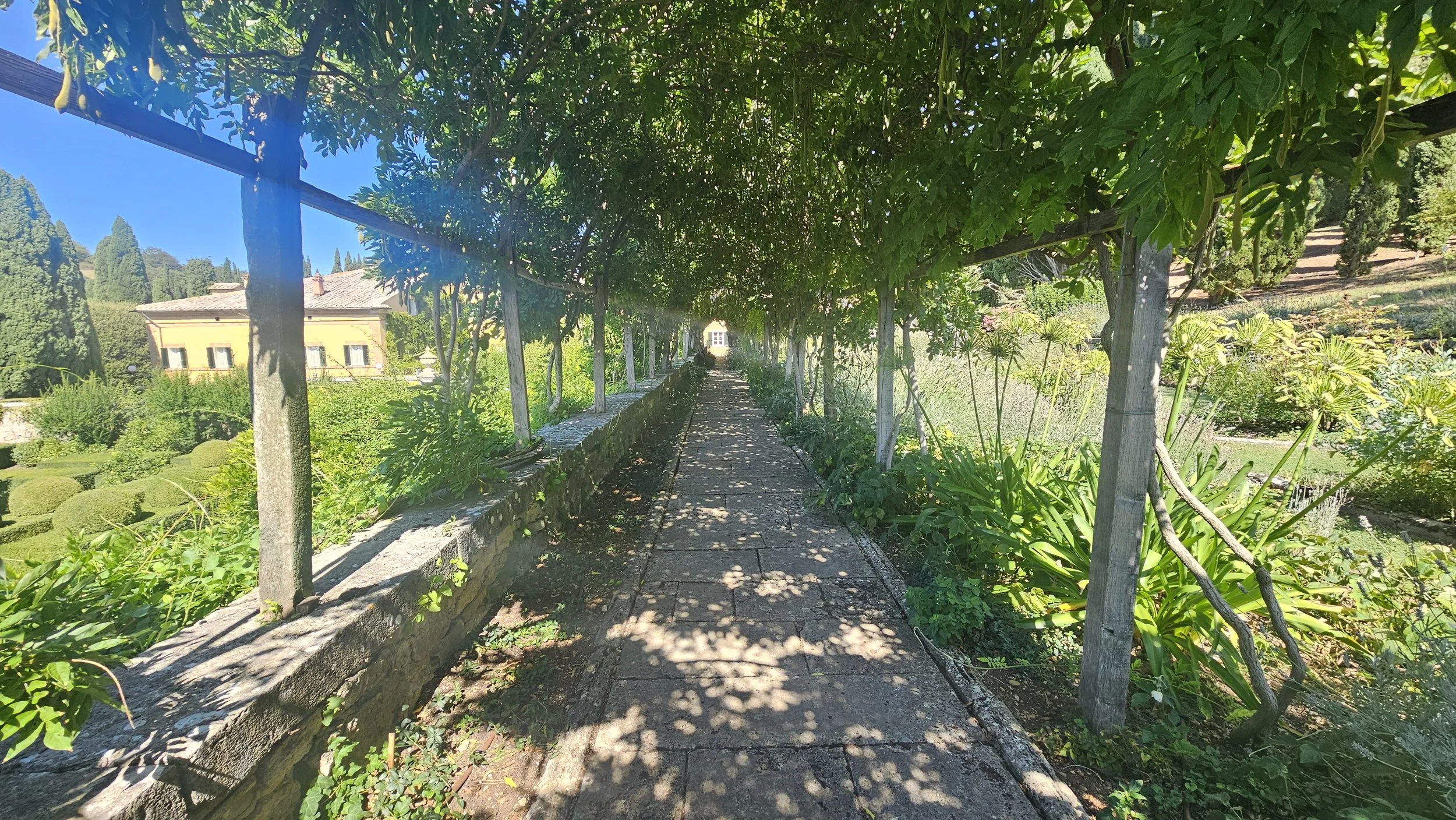
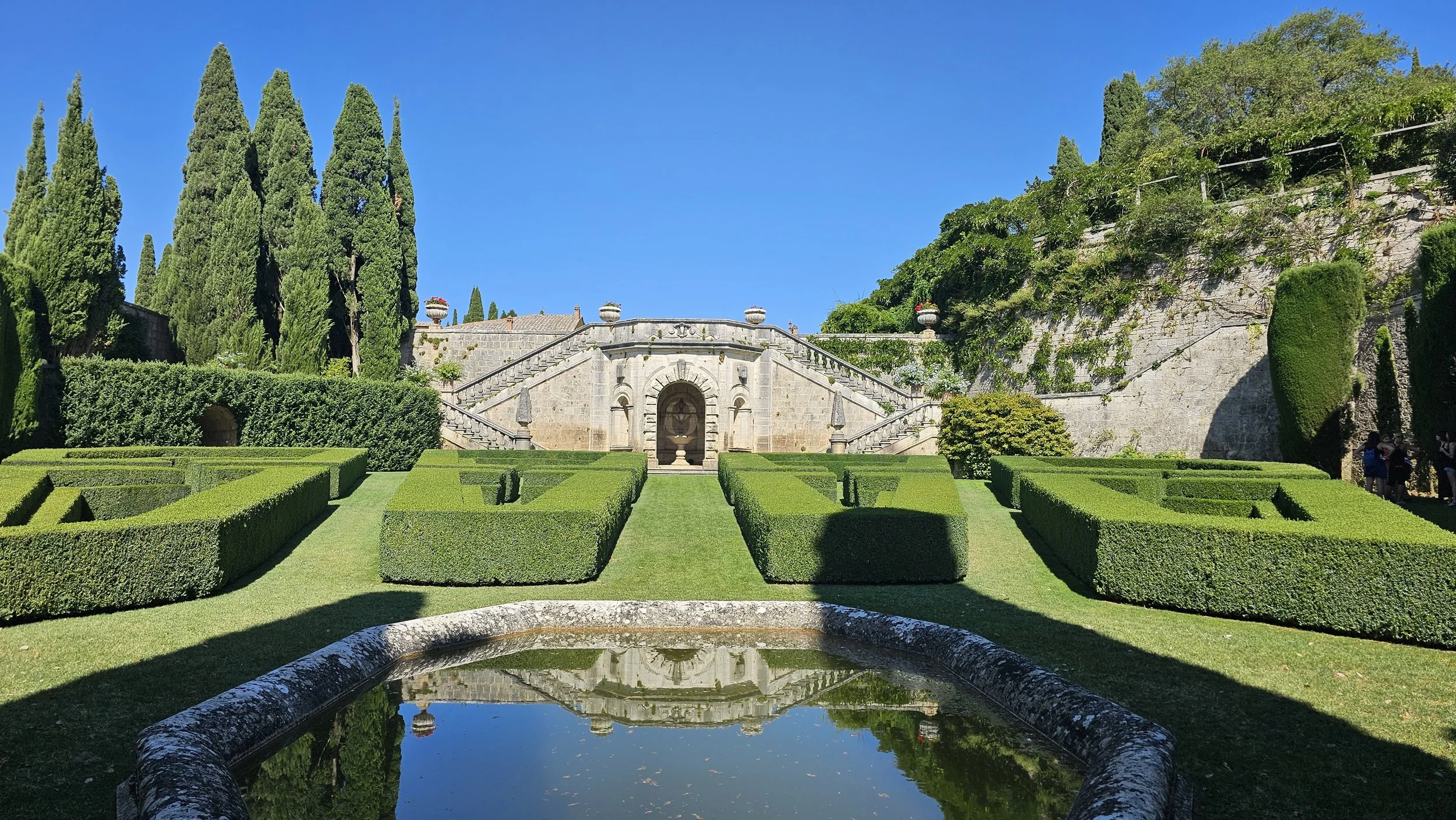
Around La Foce's villa, clipped box hedges divide a formal Italian garden into geometric "rooms," with lemon trees in terracotta pots. Travertine steps lead up to the rose garden, and a winding pergola draped in wisteria runs beside a hedge of lavender. Farther up the hill the garden loosens, with informal terraces among cypresses, pines, broom, thyme and rosemary.
And everywhere, the view.
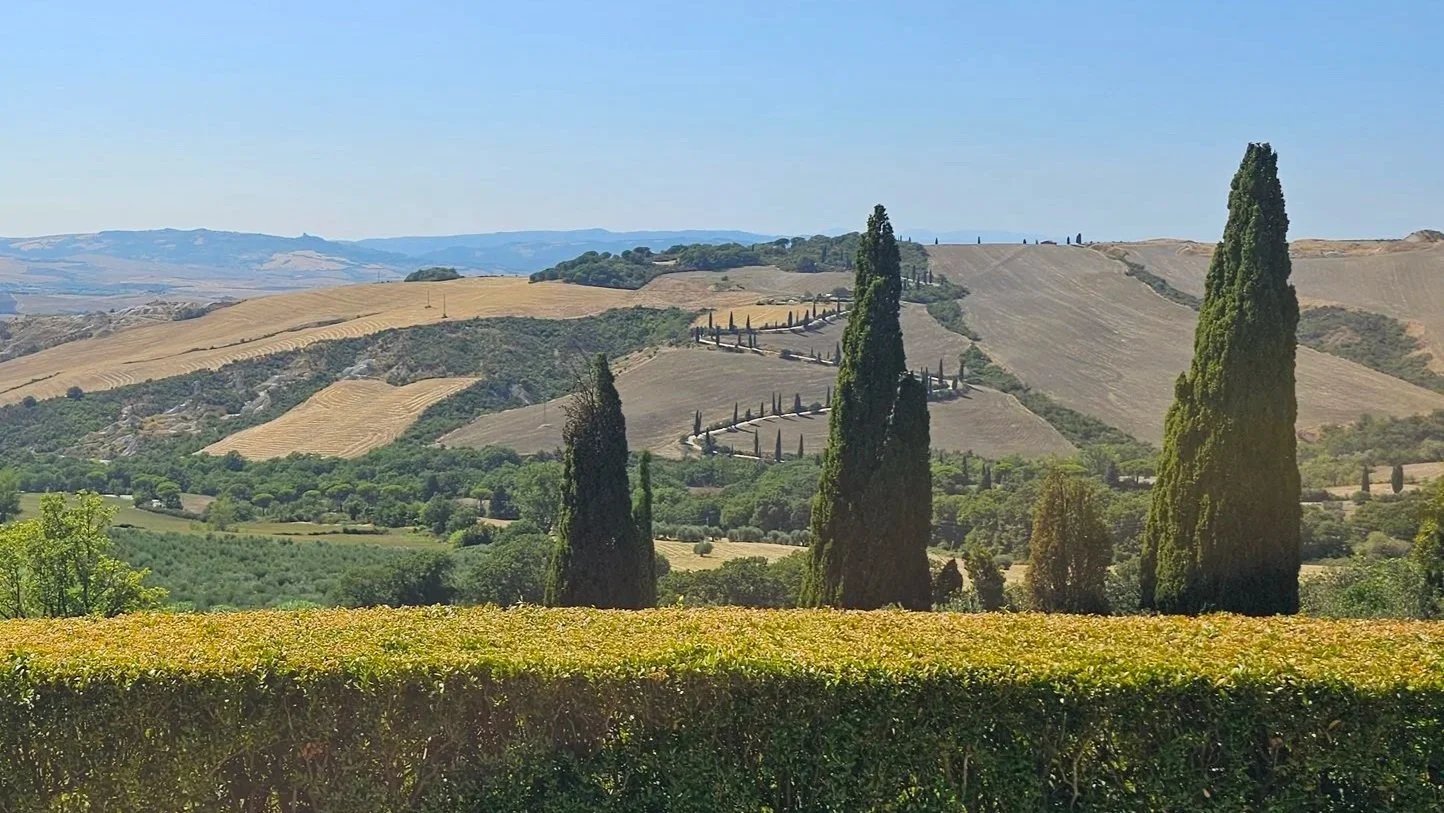
The garden looks out across the Val d'Orcia toward Mount Amiata. On the hillside opposite, in full view of the garden, a cypress-lined road zigzags up through the bare clay hills. It was built to link the estate's farms to the main road, and it is now one of the most photographed views in Tuscany. You may recognize it from photographs, but seeing it from the garden is something quite different.
More than a beautiful garden
La Foce's story is tied to Montepulciano by more than the road between them.
When the Origos arrived, the estate was run-down and the valley was poor: bare clay hills and very little water. Over the following decades they brought it back to life, building farmhouses, roads, schools and a clinic for the people who worked the land.
During the Second World War, they sheltered refugee children at La Foce, along with partisans and escaped Allied prisoners of war. On June 22, 1944, as the fighting reached the valley, Iris and Antonio led their household, the children and the farm families on foot to the safety of Montepulciano's walls. They covered roughly six miles of mined and shelled roads and fields, and around sixty people made it all the way to town.
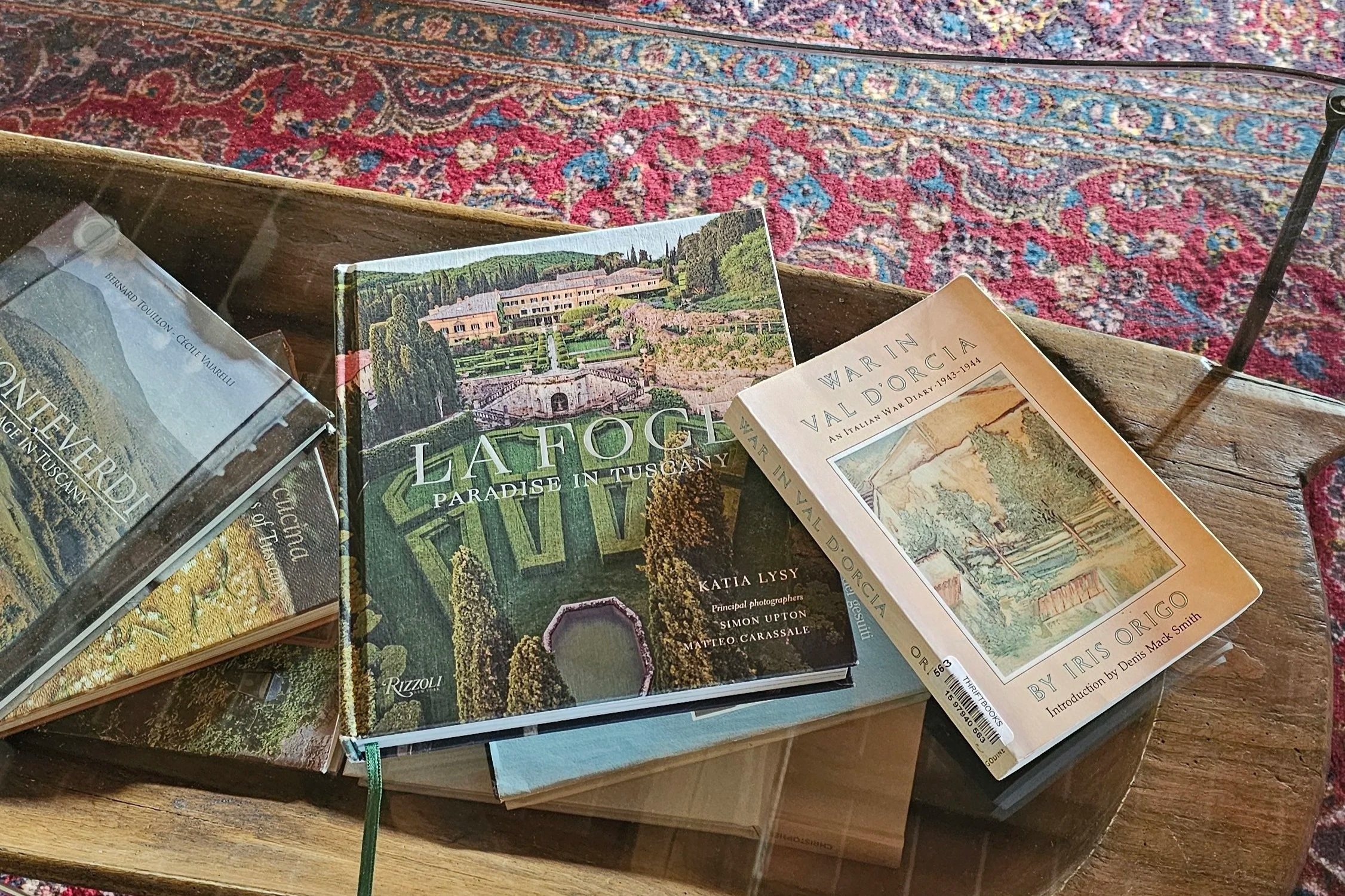
It's a remarkable piece of local history, and one reason La Foce feels like more than a pretty garden to us. To read the wartime story in Iris's own words, we recommend her diary, War in Val d'Orcia: An Italian War Diary, 1943–1944. For the earlier years, and how she and Antonio transformed the estate, her memoir Images and Shadows tells that part of the story.
Planning your visit
Planning a stay in 2027? Add La Foce to the list. The gardens open seasonally, visits are by guided tour, and advance booking is required. You'll find dates, times and tickets on La Foce's website.
If you're staying at Villa Nobile and would like help booking La Foce or other outings during your stay, Sherry can arrange them through her travel concierge service, Cin Cin Travel.
Then make an afternoon of it. Take the long way back through the Val d'Orcia, and when you return to Villa Nobile, with the Tuscan hills still fresh in your mind, let the day linger over an aperitivo on the terrace.